
Why am I sick?
Cindy Blair
1/17/20261 min read
Immune System Dysregulation
Key Causes of Repeated Illness
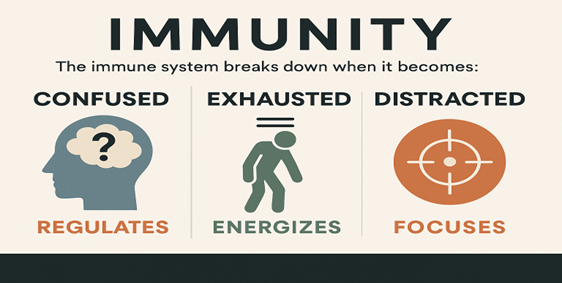
Immune Confusion: Chronic exposure to stressors (e.g., poor sleep, elevated cortisol, inflammatory foods, irregular eating) can cause the immune system to misidentify threats, leading to improper responses.
Immune Exhaustion: Insufficient cellular energy (ATP) due to stress, inflammation, or inadequate recovery impairs immune function, resulting in prolonged infections, delayed recovery, and possible reactivation of dormant viruses. Supporting metabolic health is essential.
Immune Distraction: Conditions like increased gut permeability (leaky gut) divert immune resources, causing chronic activation and reducing effectiveness against real threats.
Impact of Chronic Stress
Chronic stress disrupts cortisol balance, increases inflammation, impairs immune coordination, reduces sleep quality, and depletes mitochondrial energy. These factors collectively increase susceptibility to illness during periods of burnout or prolonged anxiety.
Principle for Immune Health
The goal is not to “boost” the immune system, but to regulate it. An optimal immune system is calm, clear, energized, and focused. Achieving this requires a holistic approach that addresses physical, emotional, and mental well-being.
Strategies for Restoring Wellness and Energy
Immune dysfunction often results from low cellular energy, mitochondrial fatigue, persistent infections, and burnout. Emotional and mental depletion frequently precedes physical symptoms.
Effective wellness strategies include:
Nervous system regulation
Improving sleep quality
Emotional processing
Stress management
Consistent nourishment
Establishing boundaries to protect energy
Summary
Immune System Dysregulation:
Repeated illness is often due to immune confusion, exhaustion, or distraction—not simply a “weak” immune system.
Chronic stress impairs immune coordination, increases inflammation, and depletes energy, raising susceptibility to illness.
Effective immune health focuses on regulation, not boosting. Key factors include physical, emotional, and mental alignment.
Restoring wellness requires supporting sleep, stress management, nourishment, and boundaries to rebuild resilience