
How Supplements are absorbed
Key Takeaways • Chelated > oxide • Methylated B vitamins absorb better • Fat‑soluble vitamins need fat • Timing and spacing matter • Quality and storage protect potency
Cindy Blair
1/28/20261 min read
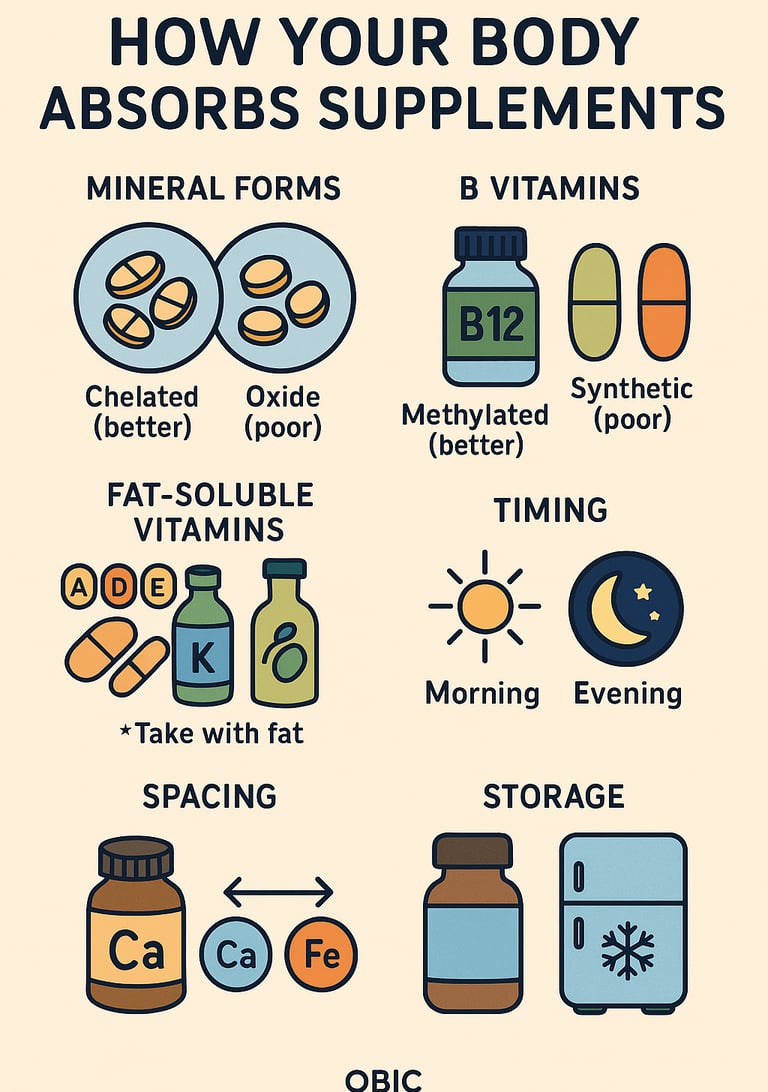
How your Body Absorbs Supplements -
1. Mineral Forms
• Chelated minerals absorb best (glycinate, picolinate, citrate, bisglycinate).
• Oxide and carbonate forms absorb poorly (magnesium oxide, zinc oxide, calcium carbonate).
2. B Vitamins
• Methylated forms (methylcobalamin, methylfolate) work immediately and bypass conversion steps.
• Synthetic forms (cyanocobalamin, folic acid) require multiple conversions and are less efficient.
3. Fat‑Soluble Vitamins (A, D, E, K)
• Must be taken with fat for absorption.
• Take with meals containing olive oil, nuts, avocado, eggs, etc.
4. Timing
Morning:
• B vitamins (energy)
• Vitamin D (with fat)
• Iron (empty stomach if tolerated)
Evening:
• Magnesium (sleep)
• Zinc (with dinner)
• Fish oil (largest meal)
5. Spacing
• Calcium & iron: separate by 2–3 hours
• Calcium & magnesium: morning vs. night
• Fiber: take 2 hours away from minerals
6. Storage
• Cool, dry place
• Refrigerate fish oil & probiotics
• Keep bottles sealed
• Replace expired or rancid supplements
7. Common Mistakes
• Buying cheap oxide forms
• Taking fat‑soluble vitamins without fat
• Taking everything at once
• Ignoring storage instructions
• Not checking the form on the label
8. Quick Troubleshooting
• Nausea: take with food, use chelated forms
• Unsure if absorbing: get labs before and after 90 days
• Coffee + iron: separate by 2 hours
• Fishy fish oil: likely oxidized
Key Takeaways
• Chelated > oxide
• Methylated B vitamins absorb better
• Fat‑soluble vitamins need fat
• Timing and spacing matter
• Quality and storage protect potency